The topic How Much Does a Plumber Cost? (And How to Find One Who Won’t Judge Your DIY Attempt) is currently the subject of lively discussion — readers and analysts are keeping a close eye on developments.
This is taking place in a dynamic environment: companies’ decisions and competitors’ reactions can quickly change the picture.
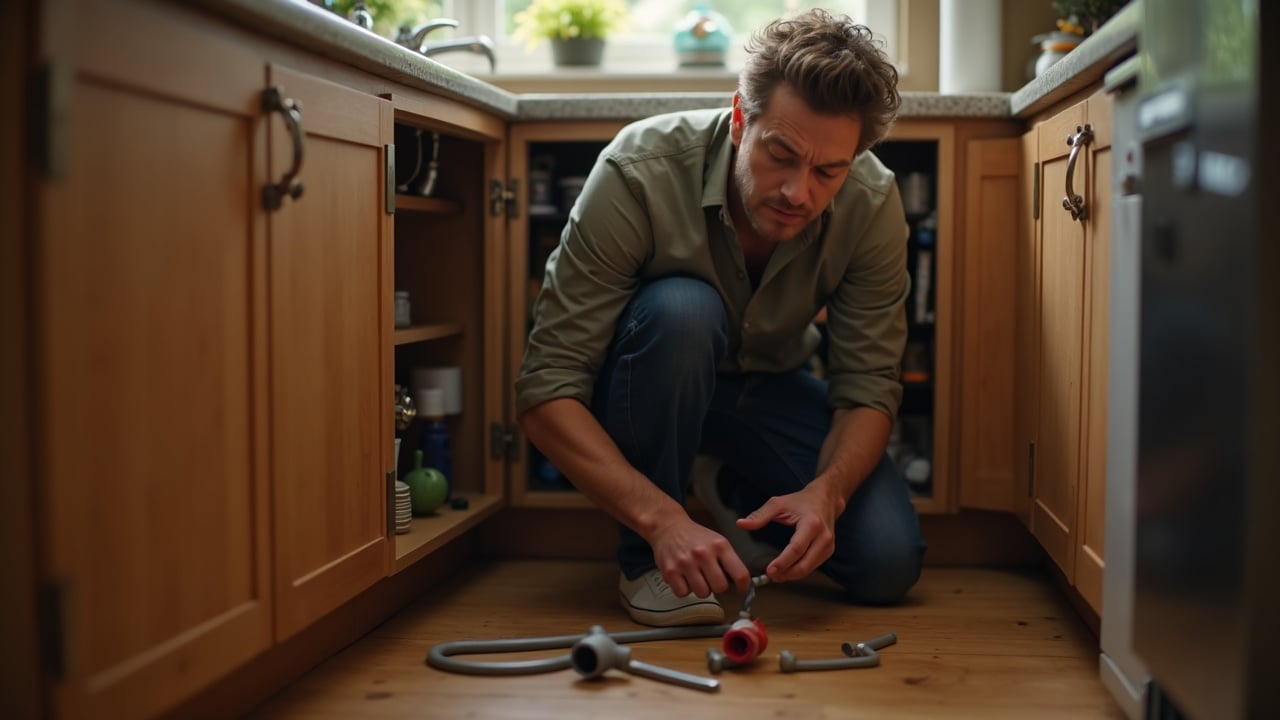
You’re three hours in, the shutoff valve is sitting in a bag on the counter, and there’s water where there wasn’t water before. And somewhere between the YouTube video and the second trip to the hardware store, the project started feeling like a very expensive mistake. Sounds familiar? If you’re looking for a guide to help you solve or prepare for this kind of repair, you’re in the right place. One survey found that 35% of homeowners have hired a professional to complete or correct a DIY project. Right now, your job is to find out what this costs and how bad the situation actually is.
This article provides real numbers by job type. It will tell you which tasks you can do on your own and which ones will need a licensed professional. If it’s the latter, this guide will recommend how and where to find someone local who won’t judge your DIY attempt.
It actually depends. But “it depends” with real brackets is useful, and that’s what you’ll find here.
Common fixture-level jobs: faucet installation runs $100 to $250 in labor while a shutoff valve replacement is $75 to $175. Drain repair lands around $100 to $250. These are labor-only numbers on simple jobs with no surprises.
Standard hourly rates run $75 to $200 in most U.S. markets while emergency and after-hours rates run $150 to $400. That 1.5x to 2.5x emergency multiplier is why “can this wait until Monday” is a financial question worth asking.
Parts markup is another number most homeowners miss. Plumbers mark up materials 20% to 50% above wholesale, which is standard trade practice. But if the $40 aerator you saw at the hardware store appears on your invoice as $55 to $60, ask upfront whether your quote includes materials or labor only.
Regional variance is the biggest variable. A $200 hourly rate in San Francisco or Boston is market rate. Meanwhile, that same rate in rural Tennessee will get a raised eyebrow. Same work, same license, different markets.
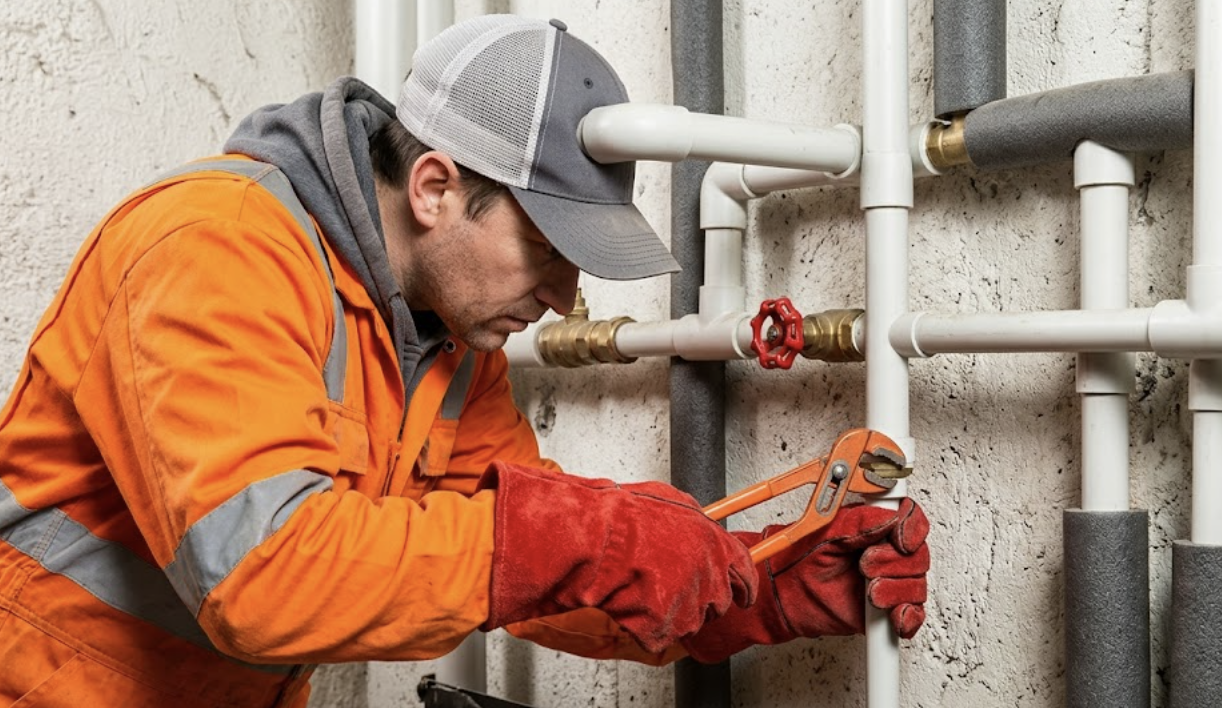
Here’s where a genuine disagreement between two experienced people actually helps you. Matt Risinger (Build Show Network) says, understand the full scope before you ask for a price, because if your DIY attempt introduced a moisture problem behind the wall, the job is no longer a faucet swap. Bob Vila’s rule is to get at least three quotes and compare them, because price variance is enormous and comparison protects you. Both are right. Sequence them, scope first, then quote. Don’t call for prices on a job you haven’t fully defined yet.
Not always. What goes into a plumber’s hourly rate is not just labor, but also the state contractor’s license, which requires testing, continuing education, and annual renewal. It’s liability insurance and workers’ comp, both of which protect you if something goes wrong on your property. It’s a truck stocked with parts for 80% of jobs they run. It’s two-hour round trips for a one-hour job in rural areas.
$200 an hour for a licensed, insured plumber during a weekday morning in a mid-size city? Probably fair. $200 an hour from someone who can’t show you a license number? Walk away. For the plumber cost per hour range in your specific market, three quotes will tell you the appropriate fee faster than any national average.
“No one tells you how stressful this stuff can be. You second-guess every decision.” That’s a real thing a real homeowner said, and it captures the moment. You’re not sure if you made it worse. Here’s the map.
The two things that turn a manageable plumbing problem into a serious one are both about what you can’t see.
A braided supply line that’s even slightly wrong at the connection will weep. Slowly at first. Then faster. The water doesn’t disappear. It goes into the cabinet floor, the subfloor, and the wall behind the cabinet. Mold starts within 48 hours in the right conditions. You don’t see it for weeks.
The worst version: “The pipe snapped off in the wall. The water came through two of the downstairs ceilings. Thousands of dollars in repair.” That’s what a slow undetected leak becomes when nobody checks the cabinet for three months. If your supply line connection is in any doubt, stop. Call a plumber to confirm it before you put the cabinet doors back on.
If the drain connection is wrong, you’ll hear it: gurgling drains, slow drainage that doesn’t fix itself. If the vent is wrong, you’ll smell it. Sewer gas. Hydrogen sulfide. It’s a health hazard at high concentrations and a permit violation in most jurisdictions. Drain and vent work is the pro zone. No exceptions.
DIY zone: shutoff valves (above the cabinet, accessible), supply lines, faucet swaps, showerhead replacements. Pro zone: anything behind the wall, main line connections, drain and vent work, gas water heaters, anything requiring a permit.
Unlicensed DIY plumbing affecting waste lines or venting can void a homeowner’s insurance claim. Not “might.” Can. A $200 service call today vs. a $4,000 mold remediation claim that gets denied. That’s not a close call.
The DIY plumbing attempt isn’t a liability because it provided you with information. Now you know where the shutoff is, and which line is hot or cold. You know the fitting that wouldn’t come off without a fight. A licensed plumber picking up from your starting point won’t be needing to start from scratch. They’re starting ahead.
A plumber who acts like you’re the first person to ever call mid-project is either inexperienced or the wrong fit. Move on.
Not every plumber advertises that they’re comfortable picking up a job someone else started. That’s exactly what the “Project Rescue Friendly” badge on the diyprojects.com directory is for. These are local pros who take handoff jobs. They expect the call. Find one near you at DIYProjects.com Directory.
Three quotes minimum for any job over $300. That’s the rule. One quote is not a data point. It’s a guess. Get the scope defined first (see Risinger above), then quote that defined scope with at least three licensed pros.
The directory at diyprojects.com connects homeowners with local plumbers, electricians, HVAC contractors, and remodelers. “Project Rescue Friendly” pros take handoff jobs and every listing includes cost guides by project type.
Turn the water off if you haven’t and check under the cabinet for moisture right now. If the connection you made looks or feels off, don’t run the water to test it and leave it for now.
Then call a professional. Most residential plumbing repairs land in the $150 to $350 range. Even the emergency ceiling of $400 to $600 is survivable. What’s not survivable is a $4,000 mold remediation job or a water damage claim denied because unpermitted work turned up in the inspection.
The math only works if the DIY attempt went right on the first try. When it doesn’t, the fastest way to control the cost is to call before the situation expands.
Find a “Project Rescue Friendly” plumber in your area at DIYProjects.com Directory. These pros expect mid-project calls. They won’t make you feel bad about how you got here. That’s what the badge is for.