The topic Smart home companies have been selling you the worst battery format on purpose is currently the subject of lively discussion — readers and analysts are keeping a close eye on developments.
This is taking place in a dynamic environment: companies’ decisions and competitors’ reactions can quickly change the picture.
My Ring alarm system covers 11 doors and windows. Every second-gen contact sensor runs on two CR2032 coin cells. The Ring Alarm Panic Button takes two more. The first-gen flood sensor uses a CR123A. The outdoor cameras run on Ring’s proprietary rechargeable pack. That’s four different battery formats inside one brand—and I haven’t even counted the Philips Hue motion sensors eating AA batteries in the upstairs hallway. This isn’t a coincidence or the result of engineers solving different problems independently. It’s a pattern, and it costs you money. Understanding why smart home reliability suffers starts with the hardware sitting in the wall right now.
Ring alone spans CR2032 cells for contact sensors, two AA batteries for the outdoor contact sensor, CR123A for first-gen accessories, and proprietary lithium packs for its cameras. That’s one brand. Add a Schlage or Yale smart lock and you’re looking at four AA batteries. Philips Hue’s indoor motion sensor takes two AAs. Zigbee contact sensors from third-party brands almost universally drop to CR2032. Some older Z-Wave motion detectors still ask for a CR2 battery—a format so obscure you’ll probably order it online just to find out it costs $8 for a two-pack.
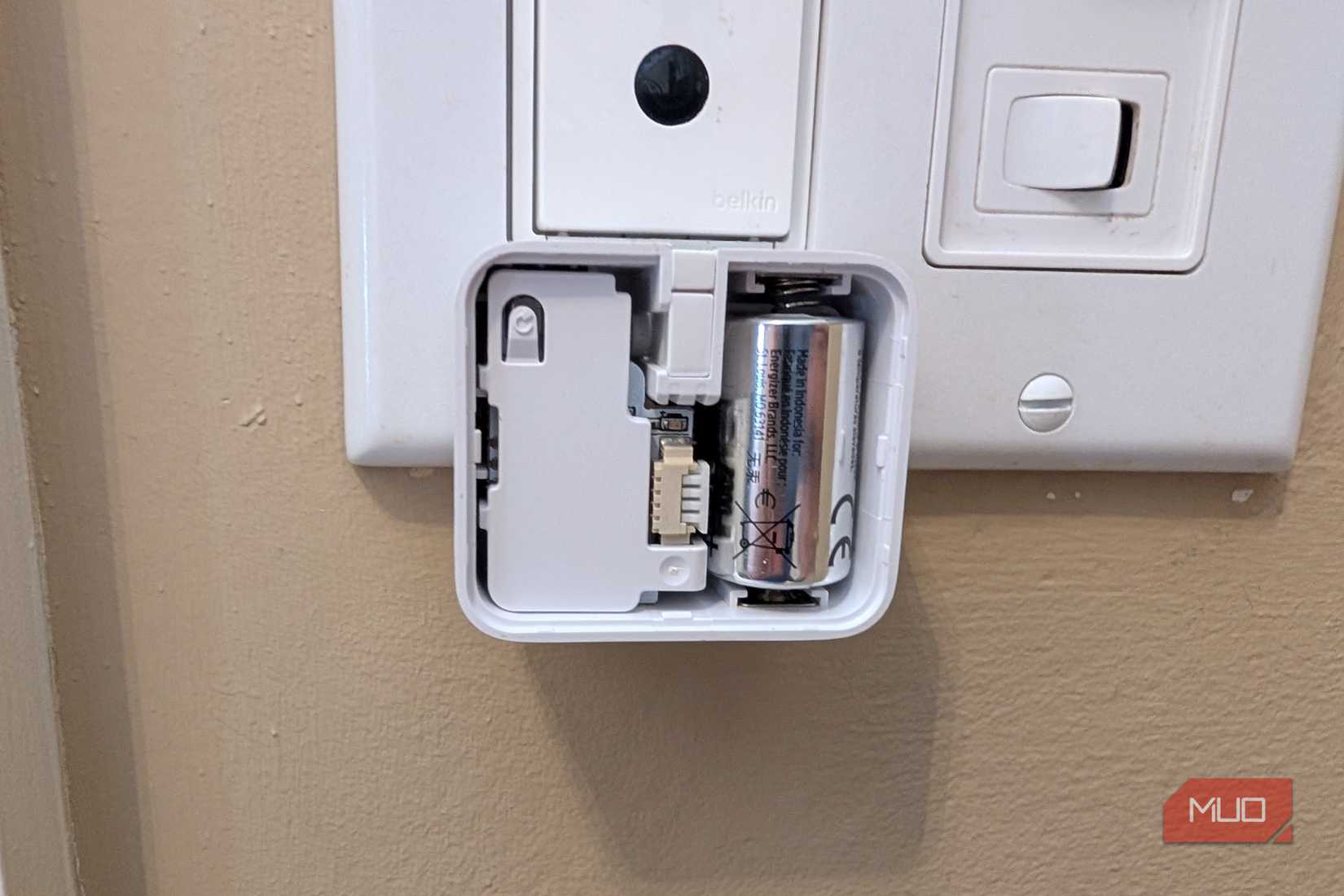
Open the junk drawer and count what’s in there. CR2032s for the door sensors, CR123As for the leftover first-gen accessories, AAs for the motion sensors and locks, a stray CR2 from three years ago. I have four formats across devices from two brands. Nothing interchangeable. When something goes offline at midnight, you’re on your hands and knees hoping you grabbed the right size.
Here’s the actual spec: a CR2032 holds about 225 mAh at 3V. A standard AA alkaline sits at 2,500–3,000 mAh. Same voltage class, more than ten times the capacity, costs about the same per cell when you buy in bulk. The coin format won out in sensors because it’s flat—which makes the sensor itself slimmer and easier to mount on a door frame. Fair trade, in theory.
In practice, Z-Wave sensors fire a radio signal on every state change. A busy front door or garage entry that opens and closes 20–30 times a day chews through 225 mAh faster than any spec sheet admits. My garage entry contact sensor—highest-traffic door in the house—needs fresh batteries every 12–18 months. Ring markets “approximately 3-year battery life.” And when they do die, replacement isn’t quick: disarm the alarm, slide the sensor off the bracket, pry out two tiny cells, try not to drop them.
CR2032s and CR123As are primary lithium cells. One use, then trash. A rechargeable version of the CR2032 exists—the LIR2032 fits the same slot—but it runs at up to 4.2V fully charged versus the 3V the circuit was built around. That voltage difference is enough to damage the device. Manufacturers know this. They spec to 3V, never mention the rechargeable option, and you buy disposables indefinitely.
Nothing about this is forced by physics. Sensors with USB-C charging ports are technically straightforward. Swappable 18650-style cells with protection circuits already exist in other product categories. Ring’s outdoor cameras charge via a proprietary lithium pack. Arlo’s cameras do the same. My eufy X10 Pro Omni doesn’t ask me for batteries at all. But the sensors—the things mounted on every door and window—get coin cells. A local home automation hub gives you more control over your devices, but it doesn’t change what’s inside the sensor on your door frame.
One charger covering the whole house would be possible if the industry settled on a single format. Instead: separate solutions for CR2032, CR123A, the camera pack, and whatever the next device happens to use. Each format is its own recurring purchase, forever.
Wired-first is the right instinct. Philips Hue bulbs on the Hue Bridge draw power from the socket—no battery anywhere in the chain. The Ring Alarm Keypad plugs into an outlet. A hardwired Ring Floodlight Cam never asks for anything. Anything you can connect to power should be.
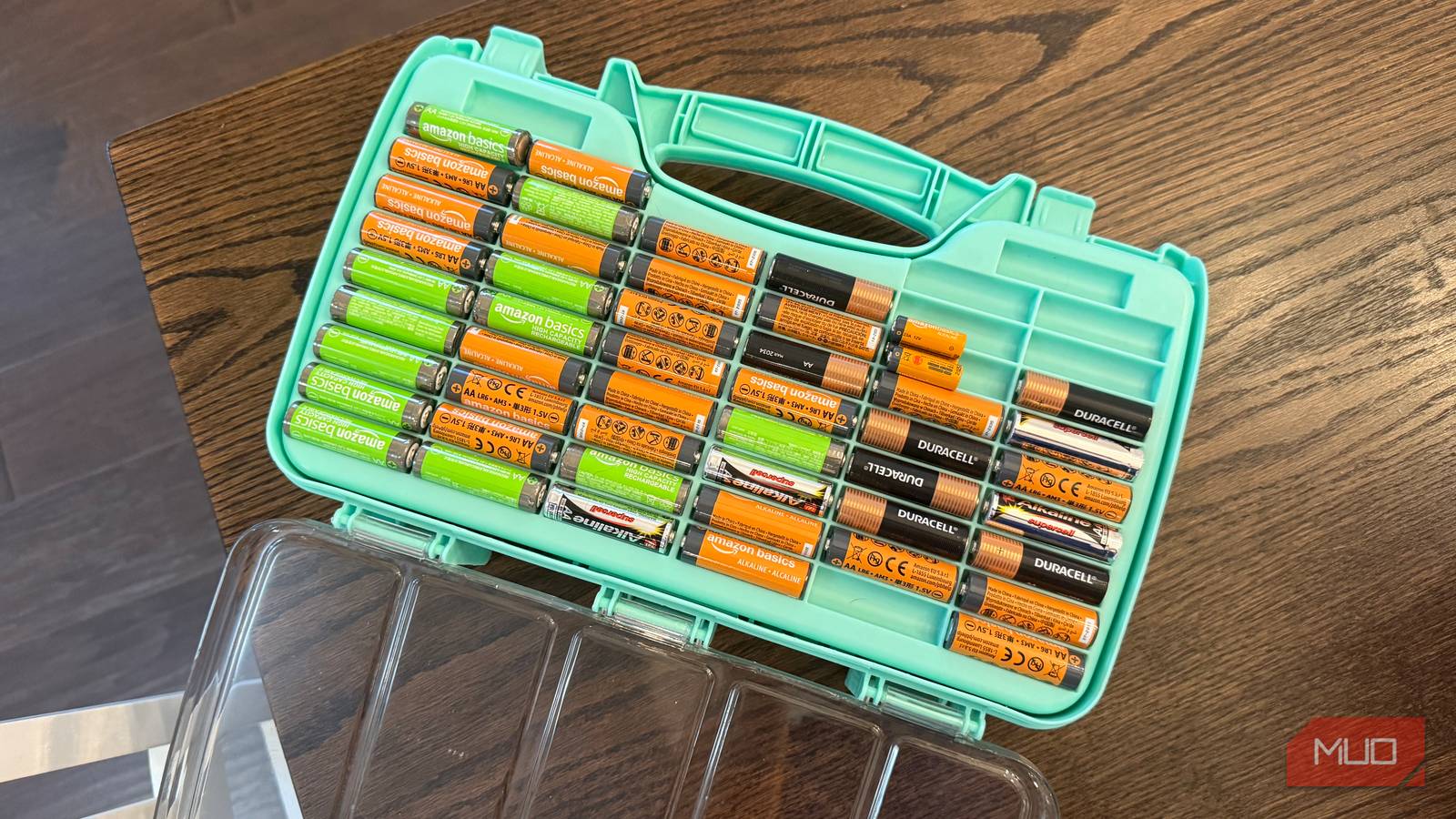
Where batteries are unavoidable, the format is your choice to make. Coin cell or AA is often a spec-sheet decision, not an engineering constraint—two different contact sensors can cover the same door, one on CR2032, one on AA. Take the AA version. They’re at every gas station, pharmacy, and hardware store. More relevant: NiMH rechargeables like Eneloop or Amazon Basics drop straight into most sensors. At 1.2V per cell versus alkaline’s 1.5V, the difference is close enough that most low-draw sensors don’t notice. That smart home platform you chose matters a lot less if a dead sensor is the thing breaking your automations at 2am.
Stock up before you need to. A 50-pack of CR2032s runs $10–$15 on Amazon. Same for CR123As in bulk. The goal isn’t to fix the industry—it’s to stop losing automations to a $0.30 battery.
Right now, somewhere in your smart home, a sensor is sitting at 10% battery. You won’t know until an automation fails or an alert doesn’t fire. Pull up your Ring app, your Hue app, or your Home Assistant dashboard and check battery levels across every device. Then count how many different formats those devices use. Three is normal. Five isn’t unusual. Every format you can eliminate—by swapping a coin-cell device for an AA-powered or wired alternative—is one fewer obscure battery to stock. The industry isn’t going to simplify this for you. It’s more profitable not to.