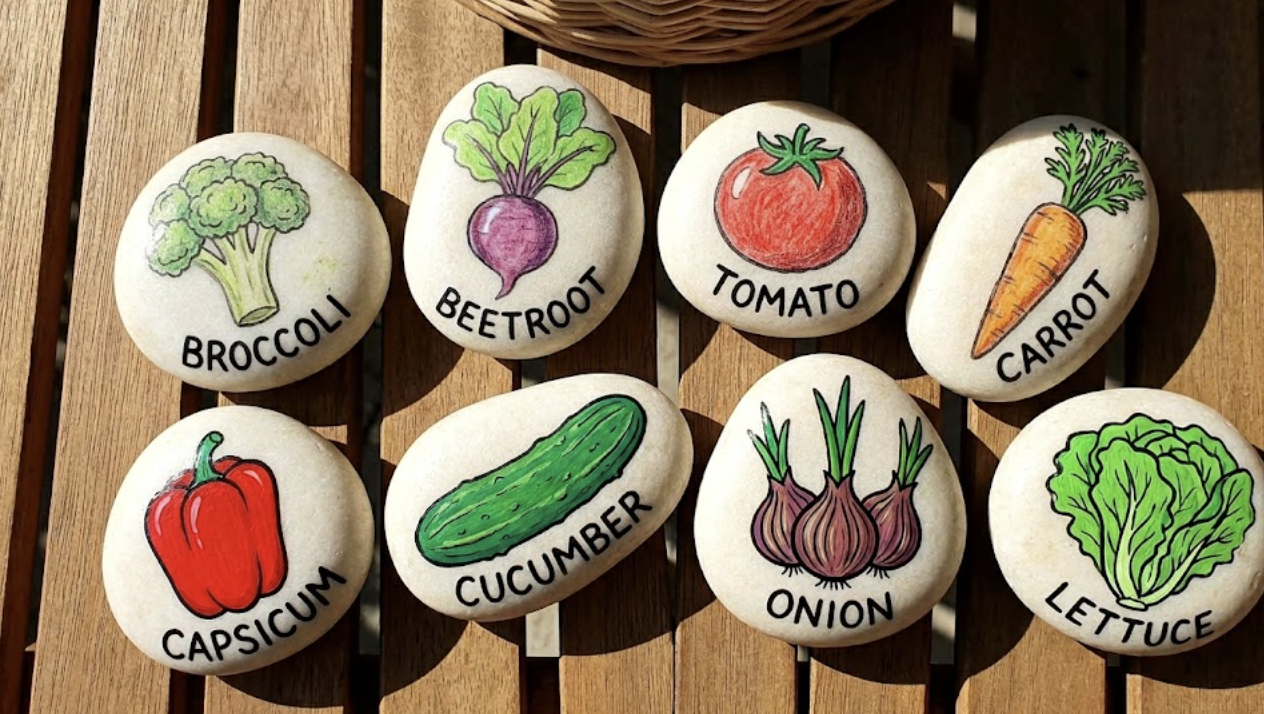
The topic Painted Rock Garden Markers: Say Goodbye to Generic Plant Labels is currently the subject of lively discussion — readers and analysts are keeping a close eye on developments.
This is taking place in a dynamic environment: companies’ decisions and competitors’ reactions can quickly change the picture.
Every spring, you swear this is the year you’ll label everything you planted in your garden. Then July rolls around and you’re staring at three rows of mystery green stuff wondering which one’s the kale and which one’s a weed you’ve been watering for six weeks. Plastic markers fade in a month. Wooden stakes rot. Sticking a seed packet on a stick? Gone by the second rain. A painted rock garden marker actually stays put, holds up to weather, and looks like you meant to put it there. Plus it gives you an excuse to spend a Saturday with paint pens, which is its own kind of therapy.
1. Clean the Stones Drop your rocks in a bucket of warm, soapy water and scrub off all the dirt, mud, and grit. Rinse them and let them dry fully in the sun at least a few hours, ideally overnight. One forum gardener put it best: “if there’s water underneath, it can ruin the paint over time.” Paint won’t stick to a damp rock, and trapped moisture will lift your design in a month.
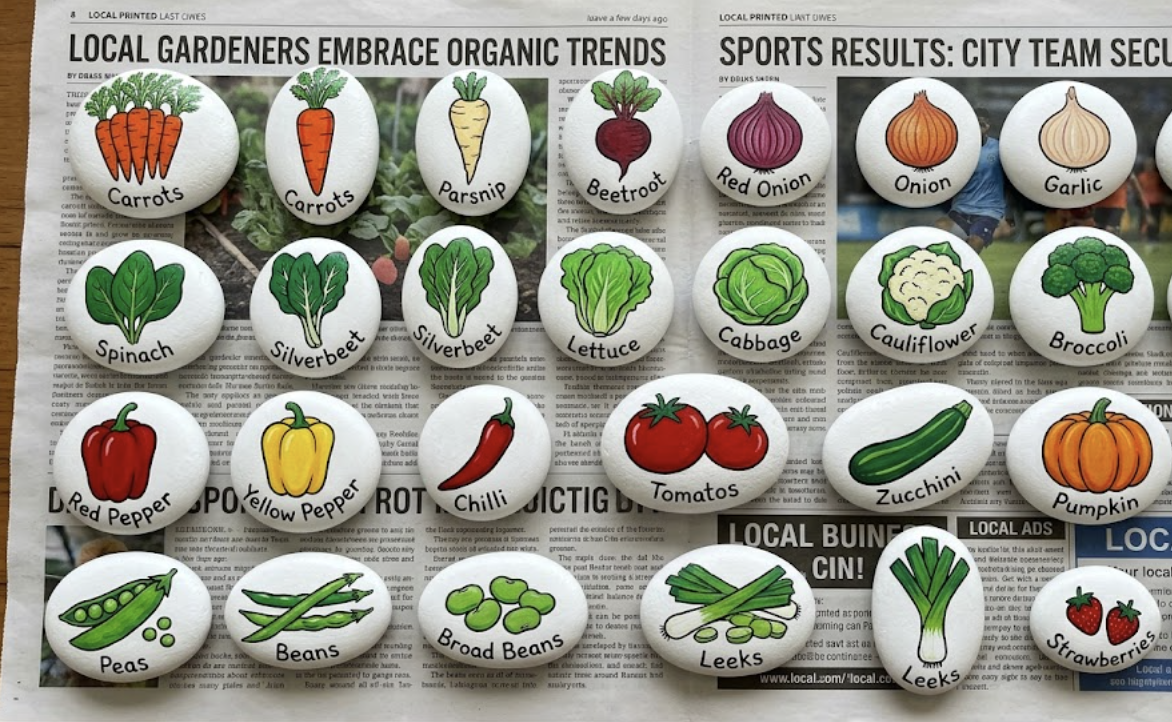
2. Sketch Your Design Pick a vegetable or herb (carrot, tomato, lettuce, basil) and lightly draw the shape on the dry stone with a pencil. Leave room at the top or bottom for the plant’s name. Don’t overthink it. Cartoon-style works best because the colors pop and the outlines hide your shaky lines.
3. Color It In Fill in the colors with your paint pens or a small brush. You’ll probably need two coats to make the colors bright and solid. Let the first coat dry for 10 minutes before adding the second. Don’t skip the dry time between coats to avoid streaks.
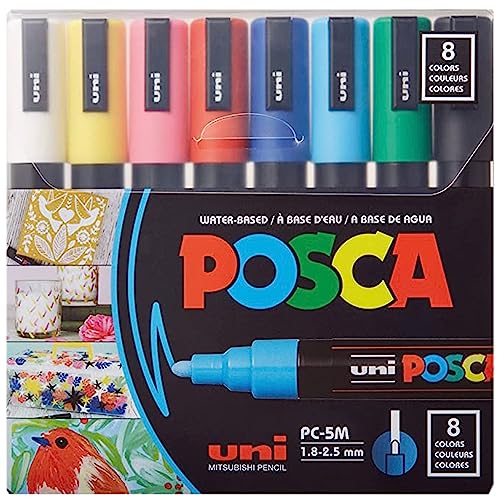
4. Add Outlines and Words Grab your black fine-tip paint pen and trace around the edge of your painted shape. This is the move that makes the whole rock look intentional like it came out of a cartoon, not a craft fail. Then write the plant name (Beetroot, Lettuce, Tomato) clearly on the stone. Block letters are easier to read from across the bed than cursive. If you guys are wondering, here’s the marker set that I use:
5. Seal the Deal Once the paint is fully dry (give it 24 hrs), take the rocks outside and lay them on old newspaper. Spray a light, even coat of clear sealer, holding the can about 8 inches away. Light coats only. A heavy coat is how Sharpie ink runs and Posca pens bleed. Let it dry, then add a second coat. Two thin coats beat one thick one every time.
For under $20 and one Saturday afternoon, you get markers that outlast plastic, look better than store-bought, and actually feel like part of the yard. Re-seal them once a year and they’ll keep going for three or four seasons easy. That’s a better return than most things you’ll buy at the garden center this spring.
1. How long will a painted rock garden marker actually last outside? With a good sealer and oil-based paint pens, expect 1 to 3 seasons before colors start fading. UV light and freeze-thaw cycles are the real enemies. Plan to re-spray a clear coat once a year. It takes 10 minutes for a full set and adds another season or two of life.
2. What’s the best paint for a painted rock garden? Posca paint pens (water-based acrylic) for the design, and a clear acrylic spray sealer like Krylon or Rust-Oleum to lock it in. Avoid regular Sharpies as tend to bleed when sealed. Some specialty outdoor patio paints (DecoArt Patio Paint) are self-sealing and skip the spray step entirely if you’d rather brush.
3. Can I use rocks from my own yard? Yes, and you should. Flat, smooth, light-colored stones work best. Wash them well, dry them at least a full day, and you’re set. The dollar saved on craft store rocks is real, and yard rocks look more natural in the garden anyway.
4. Do I really need to seal my painted rocks? If they’re going outdoors, yes. Unsealed acrylic paint will fade within weeks and wash off with the first heavy rain. The one exception is self-sealing outdoor patio paint (read the bottle. It’ll say “self-sealing” or “outdoor safe”). Everything else needs a sealer.
5. Why did my paint pen bleed when I sprayed the sealer? You probably sprayed too close, too thick, or used a Sharpie instead of a real paint pen. Hold the can 8 inches away, do light passes, and let the first coat dry before adding a second. If you used a Sharpie, redo the design with Posca or a similar acrylic paint pen. Sharpie ink and most spray sealers don’t get along.